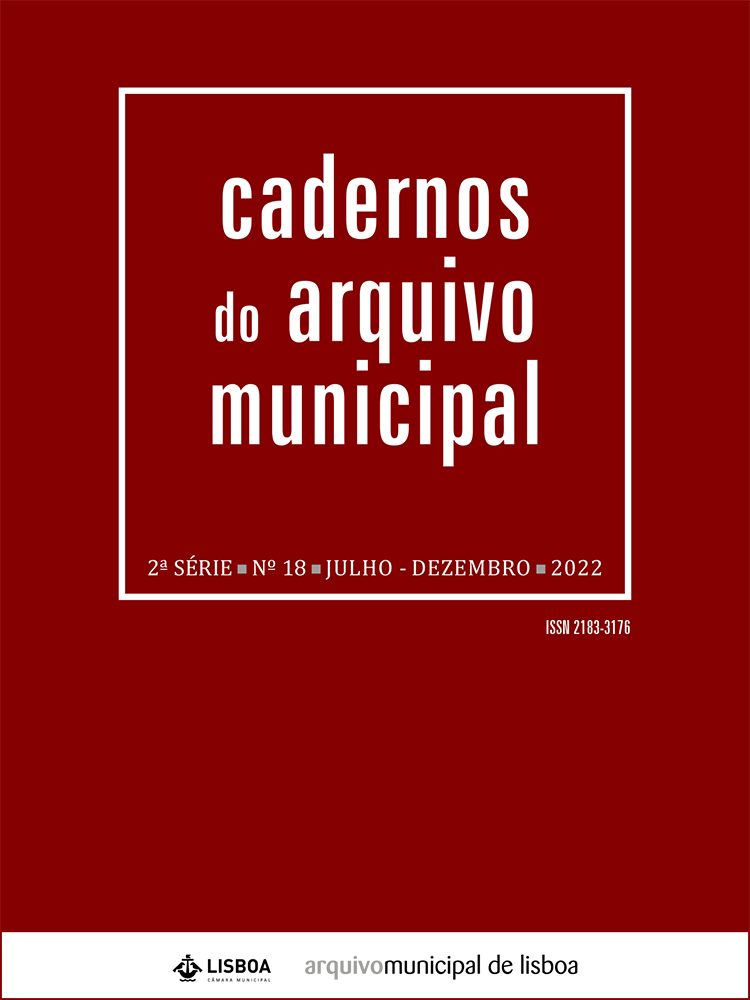
“Plano dos Centenários”: Contribution of the Lisbon Municipal Archives documentation to a case study
DOI:
https://doi.org/10.48751/CAM-2022-1874Keywords:
Estado Novo, Plano dos Centenários, Education in Lisbon, Primary schoolsAbstract
The Plano dos Centenários (Centenary Plan) was one of the largest school building initiatives promoted by the Estado Novo, with the aim of combating illiteracy, which had plagued Portugal since the nineteenth century. In 1934, after decades of political instability, discontinued reforms and insufficient resources, the government sought to organise a national school charter that would identify the needs, location and capacity of future primary schools. However, the process was slow to progress due to constant fluctuations in the programme’s pedagogical orientation and the technical and financial complexity of organising the school network, factors that successively delayed the approval of the initial plan. The consolidation of this effort culminated in 1940 with the definition of a national plan coordinated between the Ministry of National Education and the local authorities, who were responsible for financing half of the cost of the respective works, scheduled to begin in 1941. In Lisbon, the Municipal Council fully embraced the project, creating a technical commission to plan the construction and renovation of school groups. Between 1952 and 1953, several buildings were constructed, enlarged and planned, with the involvement of renowned architects in their design, while significant areas of land and municipal funds were provided for their construction. The documentation produced at the time, which is now preserved in the Lisbon Municipal Archive, is the subject of this Documenta and constitutes an essential source for understanding that plan devised for the modernisation of primary education in the municipality.
Downloads
Downloads
Published
Issue
Section
License
Copyright (c) 2022 Ana Saraiva

This work is licensed under a Creative Commons Attribution-NonCommercial 4.0 International License.
The authors retain copyright and grant the journal the right of first publication, with the work simultaneously licensed under the Creative Commons Attribution License CC BY-NC 4.0 which allows sharing and adapting the text as long as its authorship is correctly attribbuted with recognition of the initial publication in this journal.